Consulting Services Provided to Companies
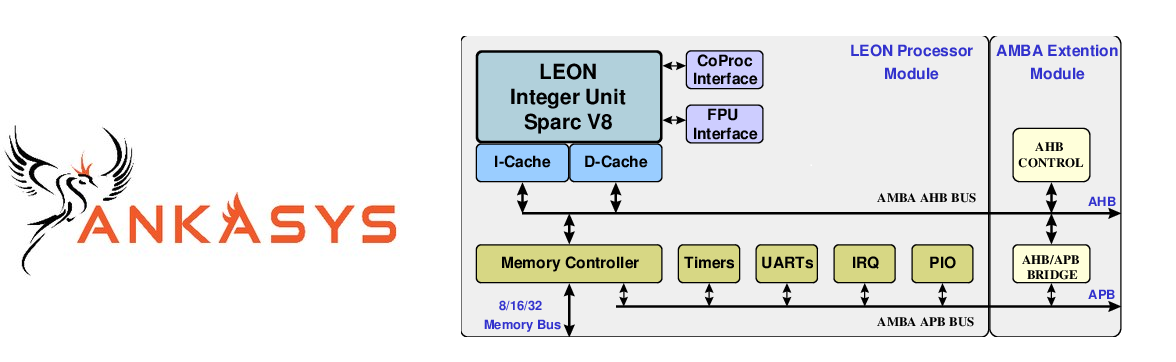
ANKA Mikroelektronik Sistemler A.Ş.
Implementation of the LEON3 Processor on FPGA
- The company was established at ITU GSTL in 2013 through a project supported under the TÜBİTAK 1512 Rapid Support Program.
- It has since become an organization conducting joint projects with ASELSAN, TÜBİTAK, ROKETSAN, and numerous international companies.
- A system-on-chip (SoC) was implemented on FPGA using the 32-bit open-source LEON3 processor.
- Open-source software-defined radio applications were executed on the system.
Development of a RISC-V-Based Microprocessor
- Within the national microprocessor development project, open-source RISC-V designs are planned to be used as a foundation and extended with application-specific enhancements.
- The project aims to develop, for the first time in Türkiye, a 32-bit system-on-chip containing a processor, general-purpose peripherals, and cryptographic IP cores, with both FPGA and ASIC implementations.
- FPGA design and testing have been completed, and the ASIC development process has begun.
- Significant progress has been made regarding the use of TÜBİTAK TÜTEL licenses.
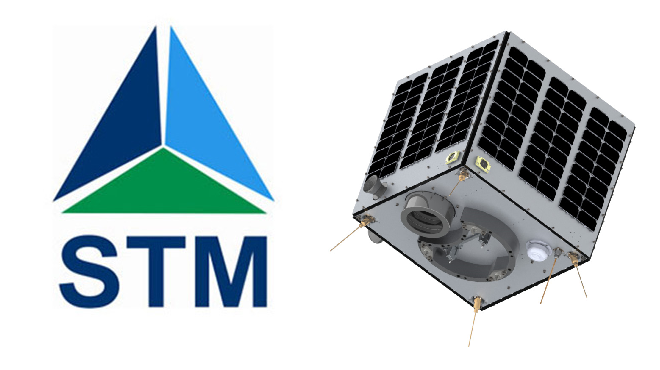
STM: Development of the MICROSATPRO National Micro-Satellite Computer
TÜBİTAK TEYDEB 1501
- The project aimed to develop, by the end of 2019, a low-power satellite computer for a national micro-satellite, offering high tolerance to space conditions and support for both military and civilian communication standards.
- The system was designed to be implemented on FPGA without creating dependency on any particular vendor.
- Linux support and a modular hardware architecture were intended to enable customer-specific system configurations.
NETA Elektronik A.Ş.
Development of a Common Interface Module for Decoding Encrypted Satellite Video Broadcasts
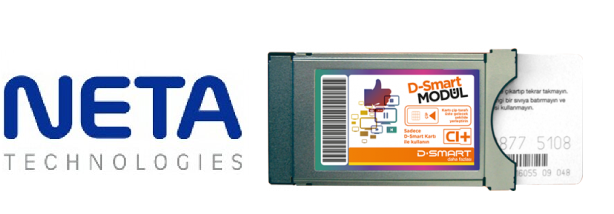
- A domestic common interface module (CAM) was developed through a collaboration between NETA A.Ş. and ITU GSTL under a TÜBİTAK TEYDEB 1501 project.
- The FPGA-based system contains components such as a RAM controller, CI controller, and smart-card controller surrounding a MicroBlaze soft-core processor.
- All these components were designed jointly by ITU GSTL and NETA A.Ş. in compliance with satellite video broadcasting standards.
- A continuously updatable, secure, and cost-effective product was designed with support for hardware, software, and real-time operating system updates delivered through satellite broadcasts.
PROCENNE – Güvenpark Bilişim Teknolojileri Ar-Ge Tic. Ltd. Şti.
Development of a National Cryptographic Library and an End-to-End Secure Communication System
- The project is supported by the TÜBİTAK 2244 Industrial PhD Program and the TÜBİTAK TEYDEB 1501 Industrial Research and Development Projects Support Program.
- Its objectives include securing mobile systems, preserving data confidentiality, authenticating endpoints, and transferring data through an end-to-end secure channel.
- The project aims to develop a fully domestic system that addresses requirements such as the secure storage of data on mobile devices and centralized systems.

PROFEN İletişim Teknolojileri ve Hiz. San. Tic. A.Ş.
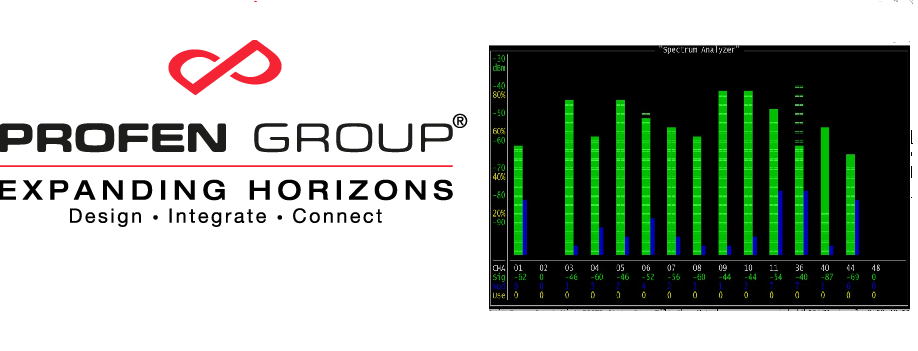
Development of a Multi-User, Remotely Accessible Real-Time Spectrum Analyzer for Satellite Communications
- The system is designed to operate within the 70 MHz–6 GHz frequency range.
- Parallel FFT-based signal processing will be used to transform ADC signals from the time domain into the frequency domain.
- Windowing techniques will be applied to enable effective signal tracking.
- The project covers FPGA design, signal processing, embedded software, and PC-based software development.
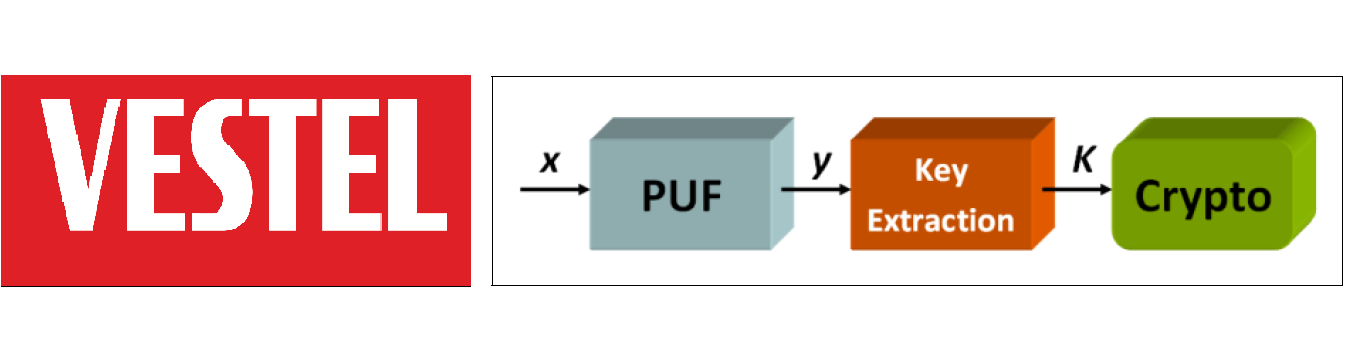
VESTEL
Protection of Intellectual Property Rights Using Physically Unclonable Functions and Helper Data
- FPGA designs were protected against counterfeiting and cloning attempts using physically unclonable functions, AES encryption, and partial reconfiguration.
- A board-specific decryption key was generated using a physically unclonable function circuit.
- Because this circuit produces a different result on each board, a copied design cannot be decrypted when transferred to another board.